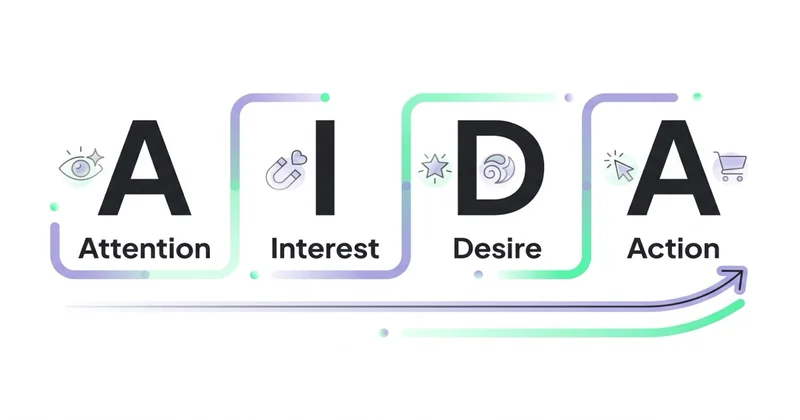
Model AIDA to klasyczna rama komunikacji marketingowej opisująca cztery etapy prowadzenia odbiorcy do działania: Attention, Interest, Desire i Action. Pomaga uporządkować reklamę, landing page, e-mail, tekst sprzedażowy lub scenariusz wideo tak, aby komunikat nie zaczynał od prośby o zakup, zanim użytkownik zrozumie wartość.
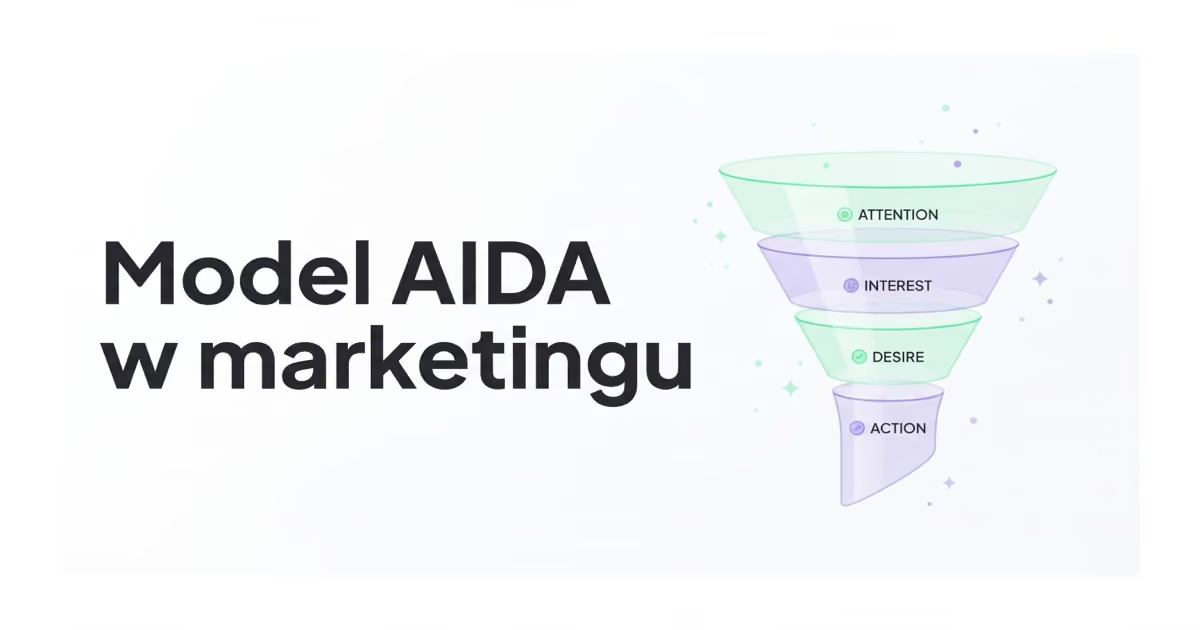
AIDA nie jest pełnym modelem całej ścieżki klienta, ale nadal jest użyteczna jako prosty schemat budowania komunikatu.
W skrócie
- AIDA oznacza: Attention, Interest, Desire, Action.
- Model pomaga tworzyć reklamy, landing page'e, e-maile i teksty sprzedażowe.
- Najpierw trzeba przyciągnąć uwagę, potem zbudować zainteresowanie, pragnienie i dopiero wezwać do działania.
- AIDA działa najlepiej, gdy jest dopasowana do intencji i etapu lejka.
- W e-commerce może wspierać karty produktów, reklamy, opisy kategorii i kampanie promocyjne.
A jak Attention, czyli uwaga
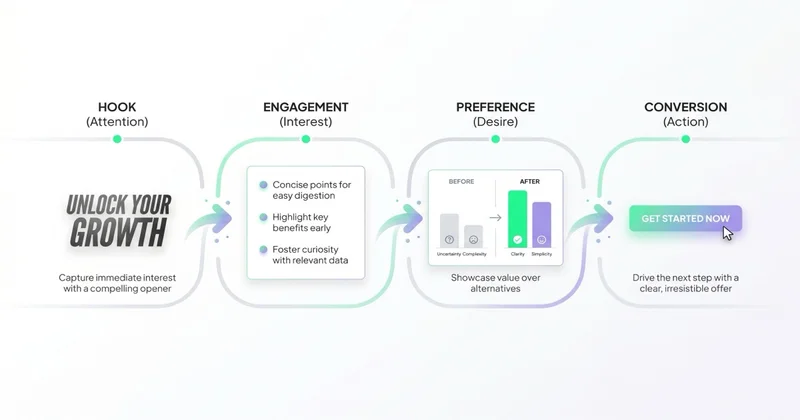
Pierwszy etap polega na zatrzymaniu odbiorcy. W zależności od kanału może to być nagłówek, obraz, pierwsze sekundy wideo, temat e-maila albo pierwsze zdanie landing page.
Dobre przyciągnięcie uwagi powinno:
- odnosić się do problemu,
- pokazywać konkretną korzyść,
- używać języka odbiorcy,
- być zgodne z ofertą,
- nie obiecywać czegoś, czego treść później nie dowozi.
I jak Interest, czyli zainteresowanie
Po zdobyciu uwagi trzeba pokazać, dlaczego temat jest istotny. To moment na wyjaśnienie problemu, kontekstu i konsekwencji braku działania.
Przykłady:
- „Koszyk jest porzucany nie tylko przez cenę, ale też przez brak zaufania.”
- „W kampaniach Search problemem często nie jest CPC, tylko źle dobrana intencja.”
- „Szybka strona mobilna wpływa na wygodę zakupu i skuteczność reklam.”
D jak Desire, czyli pragnienie lub potrzeba
Na tym etapie komunikat powinien pokazać wartość rozwiązania. Nie chodzi o agresywną perswazję, ale o zbudowanie przekonania, że oferta pasuje do problemu.
Pomagają:
- konkretne korzyści,
- dowody,
- przykłady,
- opinie,
- case studies,
- porównania,
- pokazanie efektu przed i po,
- zmniejszenie ryzyka.
A jak Action, czyli działanie
Na końcu potrzebne jest jasne CTA. Działanie powinno być logicznym następnym krokiem, np. zakup, kontakt, pobranie materiału, zapis, rezerwacja lub przejście do kategorii.
Dobre CTA:
- jest konkretne,
- pasuje do etapu lejka,
- mówi, co stanie się po kliknięciu,
- nie wymaga zbyt dużego zobowiązania za wcześnie,
- jest widoczne i spójne z treścią.
Przykład AIDA dla usługi
| Etap | Przykład komunikatu |
|---|---|
| Attention | „Kampanie Google Ads wydają budżet, ale nie dowożą jakościowych leadów?” |
| Interest | „Problem często leży w pomiarze, intencji słów i landing page, a nie tylko w stawkach.” |
| Desire | „Audyt pokazuje, które elementy generują koszt bez realnego wpływu na sprzedaż.” |
| Action | „Umów analizę konta” |
Przykład AIDA w e-commerce
| Etap | Przykład |
|---|---|
| Attention | „Buty trekkingowe na mokre szlaki” |
| Interest | „Wodoodporna membrana i podeszwa z dobrą przyczepnością pomagają w trudnym terenie.” |
| Desire | „Model dla osób, które potrzebują stabilności i ochrony przy całodziennym marszu.” |
| Action | „Przejdź do modeli trekkingowych” |
W sklepie internetowym AIDA może działać na karcie produktu, w reklamie, e-mailu, banerze i opisie kategorii.
AIDA a lejek marketingowy
AIDA jest modelem komunikatu, a lejek jest modelem ścieżki. Można je połączyć:
- góra lejka: mocniejsze Attention i Interest,
- środek lejka: Interest i Desire,
- dół lejka: Desire i Action.
Nie każdy odbiorca potrzebuje pełnej sekwencji. Osoba z zapytaniem transakcyjnym może być już blisko działania, a osoba z zimnego ruchu potrzebuje więcej kontekstu.
Jak podchodzimy do tego w Space Ads
W Space Ads używamy AIDA jako narzędzia do audytu komunikatu, a nie gotowego szablonu reklamy. Przy kreacjach, stronach docelowych i e-mailach sprawdzamy, czy pierwsza warstwa mówi językiem problemu odbiorcy, czy rozwinięcie buduje kontekst, czy część sprzedażowa pokazuje dowody i czy CTA jest logicznym następnym krokiem. W krótkich formatach, zwłaszcza w social media i wideo, etapy Attention i Interest muszą być mocno skondensowane, bo odbiorca szybko decyduje, czy zostać z przekazem. W B2B mocniej rozwijamy Desire przez przykłady, ryzyka i case studies, a w e-commerce przez konkretną korzyść, dostępność, opinie i prosty zakup. Model pomaga znaleźć brakujący element komunikatu, ale nie zastępuje testów kreacji i analizy zachowania po kliknięciu.
Najczęstsze błędy
- Rozpoczynanie od CTA bez zbudowania wartości.
- Sztuczne nagłówki clickbaitowe.
- Brak dowodów w etapie Desire.
- Zbyt wiele komunikatów naraz.
- CTA niedopasowane do etapu decyzji.
- Używanie AIDA mechanicznie bez uwzględnienia kanału.
FAQ
Czy AIDA nadal działa?
Tak, jako prosta rama komunikacji. Nie opisuje całej złożoności ścieżki klienta, ale pomaga uporządkować reklamę lub landing page.
Czy AIDA nadaje się do B2B?
Tak. W B2B trzeba jednak dodać więcej dowodów, kontekstu, ryzyka i informacji dla różnych osób w procesie decyzyjnym.
Czy każdy tekst musi mieć wszystkie etapy AIDA?
Nie. Krótka reklama może akcentować tylko uwagę i działanie, a długi landing page może rozwinąć wszystkie etapy.
Czym różni się AIDA od języka korzyści?
AIDA porządkuje sekwencję komunikatu, a język korzyści pomaga opisać wartość oferty. Te narzędzia dobrze się uzupełniają.
Najważniejsze
Model AIDA pomaga tworzyć komunikację, która prowadzi odbiorcę od uwagi do działania. Najlepiej działa wtedy, gdy jest dopasowany do intencji, kanału i etapu lejka. Największą wartość daje w reklamach, landing page'ach, e-mailach, opisach produktów i komunikatach sprzedażowych.
Źródła i dalsza lektura
Czytaj również
Jak stworzyć działające teksty reklam i uzyskać wysoki wskaźnik konwersji?
Skuteczny tekst reklamy łączy intencję odbiorcy, konkretną korzyść, wiarygodny dowód i jasny następny krok. Wpis pokazuje, jak pisać reklamy do Google Ads, social mediów i e-commerce, jak tworzyć warianty pod systemy automatyczne oraz jak testować komunikaty według hipotez, a nie przypadkowych haseł.


Czym jest i jak wykorzystać Język korzyści?
Język korzyści tłumaczy cechy produktu lub usługi na praktyczne znaczenie dla odbiorcy: oszczędność czasu, mniejsze ryzyko, wygodę, kontrolę albo lepszy wynik. Wpis pokazuje schemat cecha -> zaleta -> korzyść, rolę dowodów i zastosowanie w reklamach, opisach produktów, landing page'ach oraz e-commerce.
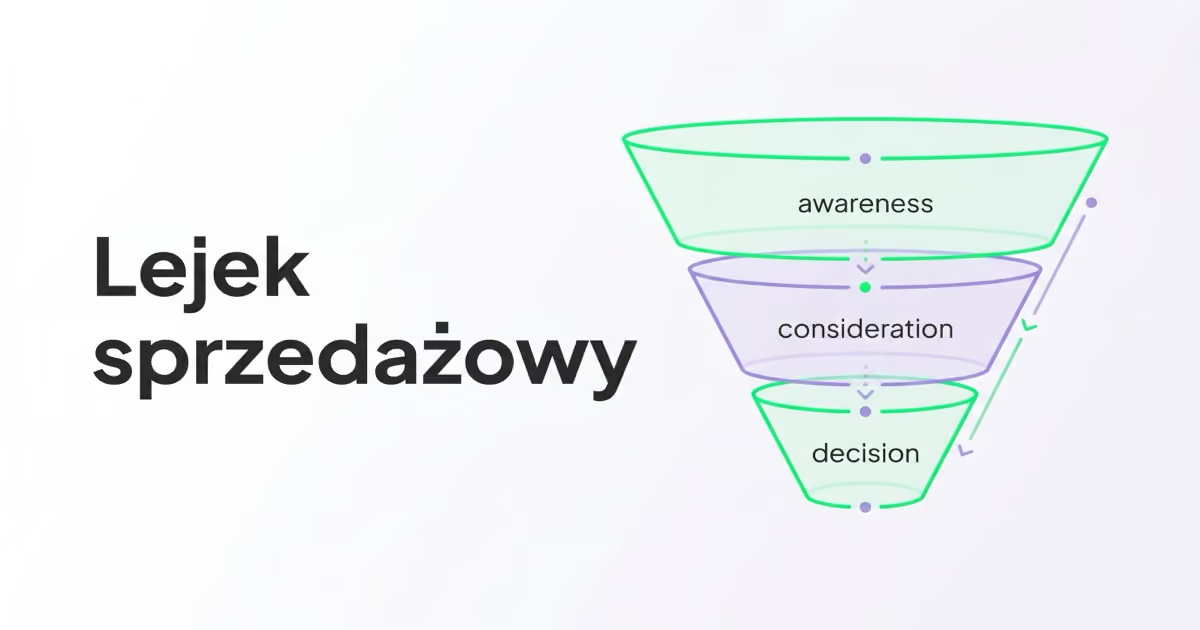
Czym jest Lejek Sprzedażowy i jak go wykorzystać?
Lejek sprzedażowy porządkuje drogę od pierwszego kontaktu z marką przez zainteresowanie, rozważanie, decyzję, zakup i lojalność. Wpis pokazuje, jak dopasować treści, kanały, KPI i pomiar do etapów decyzji, pamiętając, że realna ścieżka klienta rzadko jest liniowa.