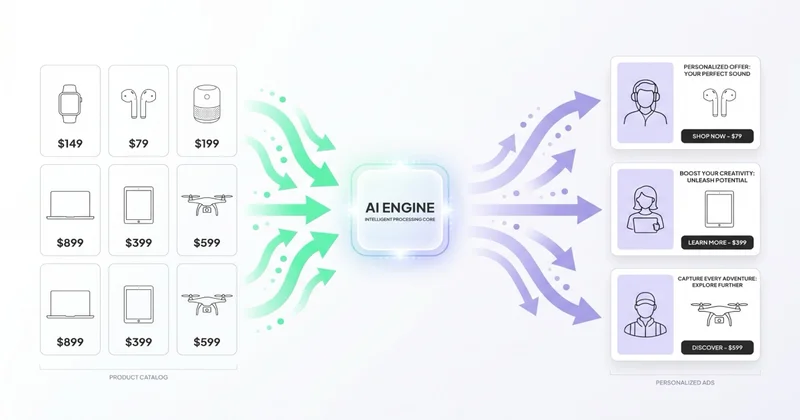
Remarketing dynamiczny to reklamy, które pokazują użytkownikowi produkty, usługi lub treści powiązane z wcześniejszym zachowaniem na stronie lub w aplikacji. W e-commerce najczęściej oznacza to reklamy produktów oglądanych wcześniej, dodanych do koszyka albo podobnych do tych, które wzbudziły zainteresowanie. Wymaga poprawnego feedu, tagów remarketingowych, list odbiorców i zgodności z zasadami prywatności.
W skrócie
- Remarketing dynamiczny dopasowuje treść reklamy do wcześniejszej aktywności użytkownika.
- W sklepach internetowych bazuje na feedzie produktowym i zdarzeniach e-commerce.
- Najważniejsze elementy: feed, tag Google Ads lub GA4, listy odbiorców, zgody, poprawne ID produktów.
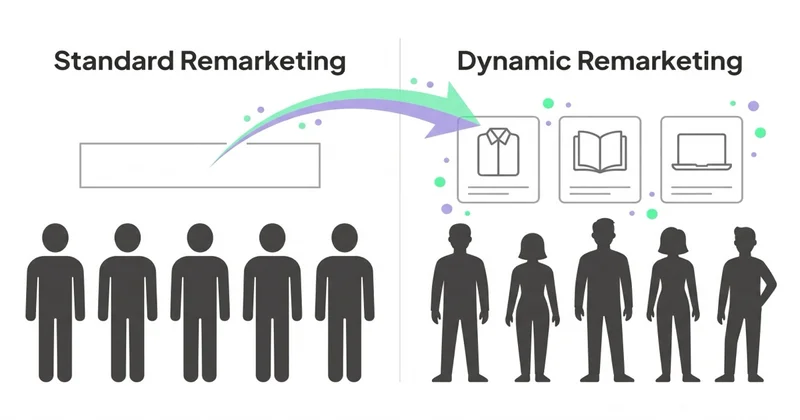
- Nie jest tym samym co zwykły remarketing, który często pokazuje jedną statyczną reklamę całej grupie.
- Największe ryzyko: reklamowanie produktów niedostępnych, z błędną ceną lub zbyt wysoką częstotliwością.
Słowniczek pojęć
- Remarketing — ponowne dotarcie do osób po kontakcie z marką.
- Remarketing dynamiczny — reklamy z elementami dopasowanymi do wcześniejszego zachowania.
- Feed produktowy — dane o produktach: ID, nazwa, cena, dostępność, zdjęcie, link.
- ID produktu — identyfikator łączący zdarzenia na stronie z produktem w feedzie.
- Lista odbiorców — grupa użytkowników spełniających określone warunki.
Jak działa remarketing dynamiczny
Proces wygląda zwykle tak:
- Użytkownik ogląda produkt lub wykonuje zdarzenie na stronie.
- Tag reklamowy albo GA4 zapisuje zdarzenie i identyfikator produktu.
- System reklamowy łączy zachowanie z feedem.
- Reklama pokazuje konkretny produkt, podobny produkt albo zestaw.
- Użytkownik wraca do strony lub sklepu.
Jeżeli identyfikatory produktów w zdarzeniach nie zgadzają się z feedem, kampania traci najważniejszą przewagę.
Zastosowania
Najczęstsze scenariusze:
- oglądany produkt,
- porzucony koszyk,
- podobne produkty,
- produkty uzupełniające,
- powrót do kategorii,
- reaktywacja dawnych klientów,
- cross-selling po zakupie.
W usługach dynamiczny remarketing może opierać się nie na produktach, ale na kategoriach, pobranych materiałach, cenniku lub etapach formularza.
Wdrożenie w e-commerce
Trzeba przygotować:
- feed produktowy w Google Merchant Center,
- tag Google Ads lub GA4,
- zdarzenia e-commerce,
- poprawne ID produktów,
- listy odbiorców,
- zgody marketingowe,
- wykluczenia kupujących,
- aktualizację cen i dostępności.
Feed i zdarzenia muszą opisywać ten sam produkt tym samym ID.
Jak podchodzimy do tego w Space Ads
W Space Ads zaczynamy remarketing dynamiczny od diagnostyki feedu i zdarzeń, bo personalizacja działa tylko wtedy, gdy system łączy właściwy produkt z właściwym zachowaniem użytkownika. Sprawdzamy zgodność ID w katalogu, tagach reklamowych i zdarzeniach e-commerce, aktualność cen, dostępność produktów, jakość zdjęć oraz wykluczenia po zakupie. Dopiero na tej podstawie układamy segmenty: osoby po obejrzeniu produktu, porzuconym koszyku, kategorii, dawni klienci i potencjalny cross-sell. Nie sprowadzamy tej kampanii do ciągłego rabatu, bo wtedy remarketing obniża marżę i przyzwyczaja klientów do czekania na kod. Lepszy efekt daje trafny produkt, jasny argument zakupowy, kontrolowana częstotliwość i pomiar, który oddziela realny wpływ kampanii od samego przypisania konwersji w panelu.
Najczęstsze błędy
| Błąd | Skutek | Lepsze podejście |
|---|---|---|
| Błędne ID produktu | brak dopasowania | spójny feed i tagi |
| Nieaktualna cena | zły UX i odrzucenia | częsta synchronizacja |
| Brak wykluczeń | reklamy po zakupie | segmenty i wykluczenia |
| Zbyt wysoka częstotliwość | irytacja | limity i rotacja |
| Brak zgód | ryzyko prawne | consent i prywatność |
Najczęstsze pytania
Czy remarketing dynamiczny działa tylko w Google Ads?
Nie. Podobna logika działa także w Meta Ads, marketplace i innych systemach reklamowych, ale Google Ads wykorzystuje m.in. Merchant Center, tagi i listy odbiorców.
Czy potrzebny jest feed?
W e-commerce tak. Feed jest źródłem danych o produktach, które mogą pojawić się w reklamie.
Czy remarketing dynamiczny jest nachalny?
Może być, jeśli nie ma limitów, wykluczeń i sensownych okien czasowych. Dobrze ustawiony przypomina o produkcie w użyteczny sposób.
Najważniejsze
- Remarketing dynamiczny łączy zachowanie użytkownika z feedem.
- Najważniejsze są poprawne ID produktów i aktualne dane.
- Segmenty powinny odpowiadać etapowi decyzji.
- Zgody i częstotliwość są częścią jakości kampanii.
- W e-commerce to jeden z podstawowych mechanizmów odzyskiwania zainteresowania.
Remarketing dynamiczny oparty o feed produktowy wdrażamy w ramach kampanii Google Ads dla sklepów internetowych.
Źródła
- Google Ads Help — dynamic remarketing
- Google Ads Help — set up dynamic remarketing
- Google Merchant Center Help
Dalsza lektura
Czytaj również

Benchmarki Google Ads: jak z nich korzystać, żeby nie wprowadzały w błąd
Średni CTR lub CPC ma wartość dopiero po dopasowaniu definicji, typu kampanii, rynku i celu. Pokazujemy, jak ocenić benchmark i zbudować własny punkt odniesienia.


Reklama aplikacji mobilnej: kampanie Google App i Meta
Google App campaigns i Meta Advantage+ app campaigns automatyzują dystrybucję, lecz nie zastępują strategii. Wynik zależy od zdarzeń po instalacji, jakości kreacji, deep linków i ekonomii kohort.

Eksperymenty w Google Ads: testy, które kończą się decyzją
Dobry eksperyment Google Ads zaczyna się od hipotezy, minimalnego istotnego efektu i reguły decyzji. Wyjaśniamy typy testów, podział ruchu, moc, opóźnienie konwersji i interpretację wyników.