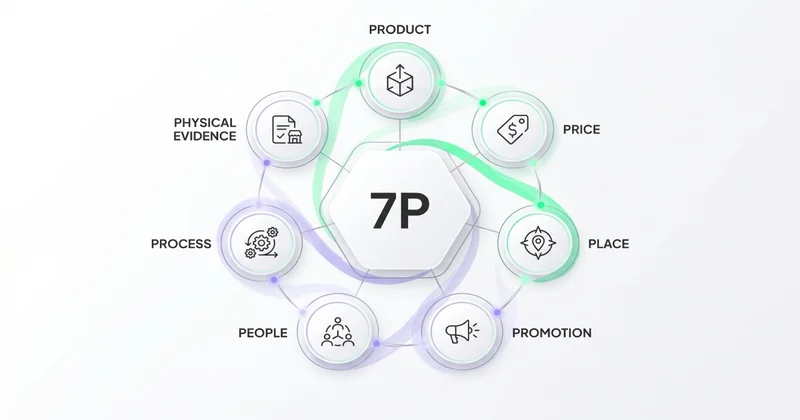
Marketing Mix 7P to model porządkujący najważniejsze elementy strategii marketingowej: Product, Price, Place, Promotion, People, Process i Physical Evidence. Rozszerza klasyczne 4P o trzy obszary szczególnie ważne dla usług, firm cyfrowych i biznesów, w których doświadczenie klienta ma duży wpływ na decyzję.
7P pomaga spojrzeć na marketing szerzej niż tylko na reklamę. Czasem problemem nie jest kampania, ale cena, proces, obsługa, brak dowodów zaufania albo niedopasowany produkt.
W skrócie
- 7P to: Product, Price, Place, Promotion, People, Process i Physical Evidence.
- Model pomaga diagnozować strategię, nie tylko planować kampanie.
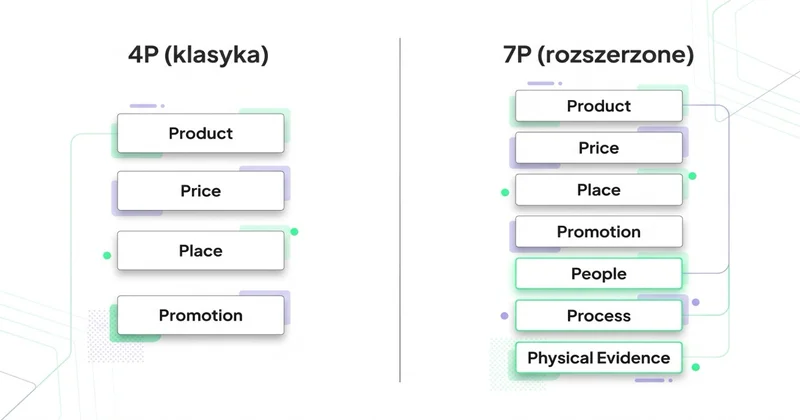
- 4P wystarcza przy prostszych produktach, a 7P lepiej opisuje usługi i doświadczenie klienta.
- Każdy element wpływa na konwersję, postrzeganie marki i rentowność.
- W e-commerce 7P obejmuje produkt, cenę, kanały sprzedaży, promocję, obsługę, checkout i dowody zaufania.
1. Product, czyli produkt lub usługa
Produkt to nie tylko fizyczny przedmiot. To także zakres usługi, pakiet, gwarancja, wdrożenie, wsparcie, warianty i sposób rozwiązania problemu.
Pytania kontrolne:
- jaki problem rozwiązuje oferta,
- dla kogo jest najlepsza,
- czym różni się od alternatyw,
- które elementy są kluczowe dla decyzji,
- co jest obietnicą, a co realnym dowodem.
2. Price, czyli cena
Cena komunikuje wartość i pozycjonowanie. Niska cena może zwiększać dostępność, ale też obniżać postrzeganą jakość. Wysoka cena wymaga mocniejszych dowodów wartości.
Do analizy:
- marża,
- model płatności,
- rabaty,
- pakiety,
- koszt wejścia,
- porównanie z konkurencją,
- akceptowalny koszt pozyskania klienta.
3. Place, czyli dystrybucja
Place oznacza miejsce i sposób dostarczenia oferty. W digital marketingu obejmuje stronę, sklep, marketplace, aplikację, sprzedaż przez partnerów, social commerce i kanały offline.
Pytania:
- gdzie odbiorca chce kupić lub skontaktować się z firmą,
- czy proces jest wygodny,
- czy kanały są spójne,
- czy produkt jest dostępny tam, gdzie powstaje intencja.
4. Promotion, czyli promocja
Promotion obejmuje reklamę, SEO, content, social media, e-mail, PR, sprzedaż, eventy i działania partnerskie. To część marketingu najbardziej widoczna, ale nie zawsze najważniejsza.
Dobra promocja wynika z wcześniejszych P: produktu, ceny i dystrybucji. Reklama nie naprawi oferty, która nie odpowiada potrzebom rynku.
5. People, czyli ludzie
People obejmuje osoby, które wpływają na doświadczenie klienta: sprzedaż, obsługę, konsultantów, specjalistów, kurierów, support i zespół wdrożeniowy.
W usługach to jeden z najważniejszych elementów. Klient często kupuje zaufanie do ludzi, nie tylko opis usługi.
6. Process, czyli proces
Process oznacza sposób, w jaki klient przechodzi od zainteresowania do zakupu, wdrożenia i obsługi.
Przykłady procesów:
- zakup w sklepie,
- checkout,
- formularz kontaktowy,
- onboarding,
- konsultacja,
- reklamacja,
- zwrot,
- wdrożenie usługi.
Proces powinien być prosty, przewidywalny i dobrze komunikowany.
7. Physical Evidence, czyli dowody materialne
W usługach i produktach cyfrowych klient często nie może ocenić jakości przed zakupem. Dlatego potrzebne są dowody:
- opinie,
- case studies,
- certyfikaty,
- portfolio,
- zrzuty ekranu,
- raporty,
- zdjęcia realizacji,
- dane firmy,
- standardy obsługi,
- dokumenty i regulaminy.
7P w e-commerce
| Element | Przykład w sklepie internetowym |
|---|---|
| Product | Asortyment, warianty, opisy, zdjęcia |
| Price | Cena, rabaty, darmowa dostawa, marża |
| Place | Sklep, marketplace, mobile, odbiór osobisty |
| Promotion | Google Ads, SEO, Meta Ads, e-mail |
| People | Obsługa klienta, doradcy, opinie |
| Process | Checkout, zwroty, płatności, dostawa |
| Physical Evidence | Recenzje, zdjęcia, certyfikaty, dane firmy |
Model 7P pomaga znaleźć problemy, których nie widać w samych kampaniach reklamowych.
Jak wykonać audyt 7P?
Najprostszy proces:
- Wypisanie wszystkich siedmiu obszarów.
- Ocena każdego obszaru z perspektywy klienta.
- Wskazanie barier w decyzji.
- Porównanie z konkurencją.
- Ustalenie priorytetów.
- Przypisanie działań i właścicieli.
Jak podchodzimy do tego w Space Ads
Marketing Mix 7P wykorzystujemy jako sposób diagnozowania, czy reklama naprawdę jest źródłem problemu. W audycie patrzymy na produkt, cenę, dostępność, komunikację, obsługę, proces zakupu i dowody zaufania, zanim uznamy, że wystarczy zmienić kampanię. Jeśli oferta jest droższa od konkurencji, checkout jest niewygodny, dostawa niejasna, a strona nie pokazuje opinii ani case studies, płatny ruch tylko szybciej pokaże te słabości. Reklama może zwiększyć skalę tego, co już działa, ale nie zastąpi mocnej propozycji wartości i dobrego doświadczenia po kliknięciu. Dlatego wnioski z kampanii traktujemy też jako sygnał do pracy nad ofertą, stroną i procesem sprzedaży.
Najczęstsze błędy
- Traktowanie marketingu tylko jako promocji.
- Brak analizy procesu zakupu.
- Słabe dowody zaufania przy drogiej ofercie.
- Cena niedopasowana do obietnicy.
- Brak spójności między reklamą a doświadczeniem po kliknięciu.
- Pomijanie obsługi klienta jako elementu marketingu.
FAQ
Czym różni się 7P od 4P?
4P obejmuje Product, Price, Place i Promotion. 7P dodaje People, Process i Physical Evidence, czyli elementy szczególnie ważne dla usług i doświadczenia klienta.
Czy 7P dotyczy tylko usług?
Nie. Model jest bardzo przydatny w usługach, ale sprawdza się też w e-commerce, SaaS, edukacji i produktach cyfrowych.
Czy 7P pomaga w reklamie?
Tak, bo pokazuje, czy problem leży w promocji, czy w ofercie, cenie, procesie lub zaufaniu.
Jak często analizować 7P?
Warto robić przegląd przy zmianie oferty, spadku konwersji, wejściu na nowy rynek i planowaniu strategii rocznej lub kwartalnej.
Najważniejsze
Marketing Mix 7P pomaga ocenić cały system marketingowy, nie tylko reklamy. Produkt, cena, dystrybucja, promocja, ludzie, proces i dowody zaufania wpływają razem na decyzję klienta. Gdy kampanie nie działają, przyczyna często znajduje się poza samym panelem reklamowym.
Źródła i dalsza lektura
Czytaj również
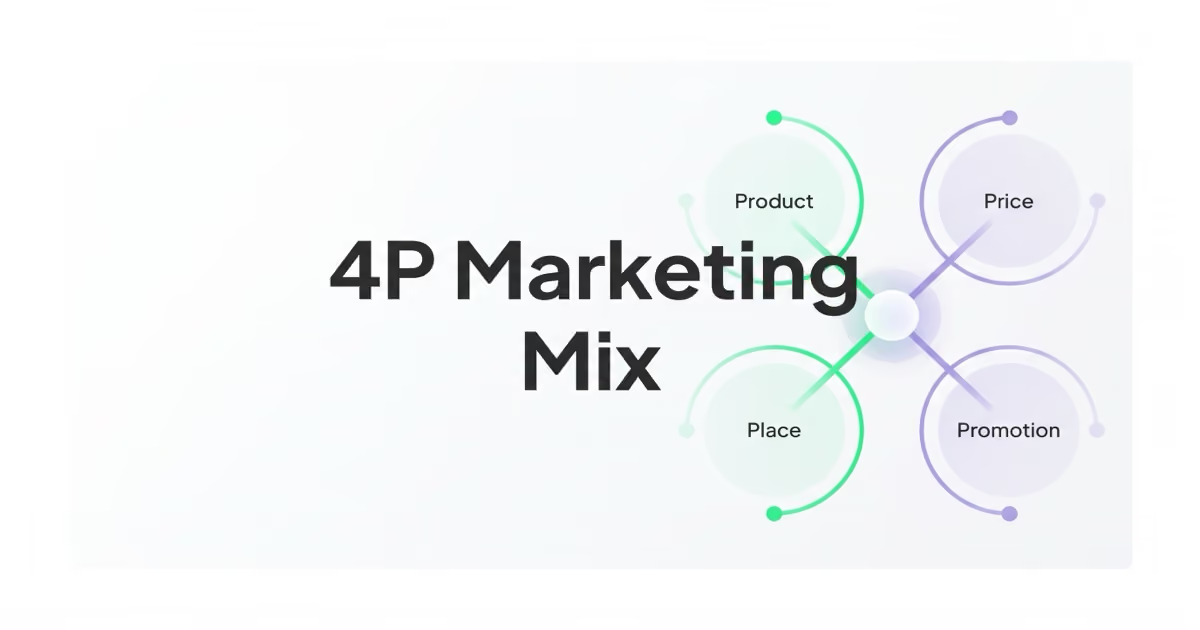
Czym jest 4P Marketing i jak go wykorzystać?
4P Marketing porządkuje strategię przez cztery elementy: produkt, cenę, miejsce sprzedaży i promocję. Wpis pokazuje, jak wykorzystać marketing mix do diagnozy oferty, marży, kanałów sprzedaży i komunikacji oraz dlaczego słabe wyniki kampanii często wynikają z problemu poza samą reklamą.


ChatGPT Ads — formaty reklam i limity znaków według dokumentacji OpenAI
Reklama w ChatGPT pojawia się pod odpowiedzią i ma sześć elementów, a limity są konkretne: tytuł 3–50 znaków, opis do 100. Obiegowe liczby „24 / 48 znaków" nie zgadzają się z dokumentacją, więc wpis podaje pełną tabelę limitów, pokazuje, jak zmieścić komunikat po polsku, i opisuje wymogi wobec obrazu, reklam produktowych oraz strony docelowej.
OpenAI Ads Manager — jak wygląda panel i jak uruchomić pierwszą kampanię
OpenAI Ads Manager ma trzy poziomy struktury — kampanię, grupę reklam i reklamę — lecz start wymaga także weryfikacji firmy, konfiguracji płatności i świadomego wyboru nieodwracalnych ustawień. Wpis prowadzi przez aktualny proces i wyjaśnia podpowiedzi kontekstowe, budżety, oCPC, kierowanie oraz różnice między panelem, Ads API i operacjami hurtowymi.