Audyt SEO to systematyczna diagnoza strony pod kątem widoczności w wyszukiwarce, jakości treści, indeksowania, techniki, linkowania i doświadczenia użytkownika. Dobry audyt nie kończy się listą błędów. Powinien pokazać, które problemy realnie ograniczają ruch, konwersje, widoczność marek i przychody.

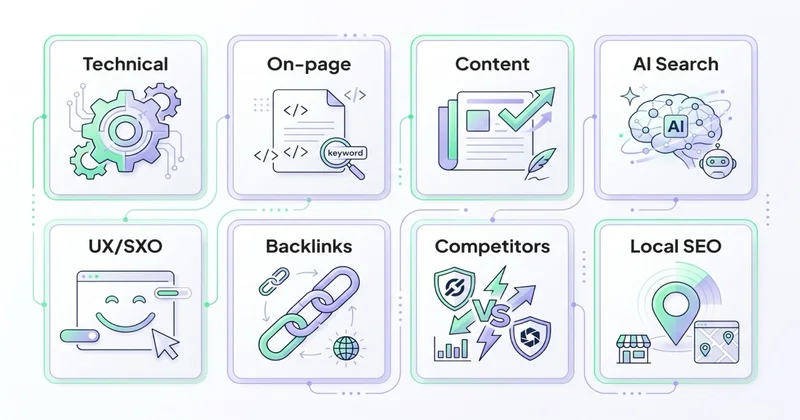
W 2026 r. audyt SEO nie może ograniczać się do meta tagów i listy 404. Trzeba sprawdzić także jakość treści, intencje wyszukiwania, dane strukturalne, Core Web Vitals, indeksację, linkowanie wewnętrzne, kanibalizację, autorytet tematyczny oraz to, czy treści są pomocne, wiarygodne i oparte na doświadczeniu.
W skrócie
- Audyt SEO sprawdza, dlaczego strona nie osiąga pełnego potencjału organicznego.
- Najważniejsze obszary to technika, indeksacja, treść, intencje, linkowanie, autorytet i UX.
- Audyt powinien kończyć się priorytetami, nie tylko tabelą błędów.
- Nie każda rekomendacja ma taką samą wagę — najpierw naprawia się problemy blokujące indeksację, konwersję i ważne klastry tematyczne.
- AI Search i AEO nie wymagają magicznych sztuczek, tylko jasnych odpowiedzi, źródeł, struktury, danych uporządkowanych tam, gdzie mają sens, i treści pisanej dla ludzi.
- Audyt warto powtarzać po większych zmianach strony oraz cyklicznie przy aktywnym SEO.
Słowniczek pojęć
- Indeksacja — obecność adresu w indeksie Google.
- Crawl — pobieranie stron przez roboty wyszukiwarki.
- Sitemap — mapa adresów pomagająca wyszukiwarce znaleźć ważne URL-e.
- Canonical — wskazanie preferowanej wersji adresu.
- Core Web Vitals — metryki jakości doświadczenia strony, m.in. LCP, INP i CLS.
- Kanibalizacja — kilka adresów konkuruje o tę samą intencję.
- E-E-A-T — experience, expertise, authoritativeness, trustworthiness.
- AEO — optymalizacja pod odpowiedzi, FAQ i cytowalne fragmenty.
Obszary audytu SEO
1. Technika i indeksacja
Najpierw trzeba sprawdzić, czy ważne strony są dostępne, indeksowalne i nieblokowane przez robots.txt, noindex, błędne canonicale, przekierowania albo problemy serwera. Jeśli Google nie może poprawnie pobrać i zrozumieć strony, dalsze prace contentowe nie rozwiążą problemu.
2. Architektura informacji
Struktura serwisu powinna pokazywać, które tematy, kategorie i usługi są najważniejsze. Audyt obejmuje menu, linkowanie wewnętrzne, głębokość kliknięcia, breadcrumbs, klastry tematyczne i relacje między treściami.
3. Treść i intencja
Każda ważna strona powinna odpowiadać na konkretną intencję. Audyt sprawdza, czy treść jest aktualna, kompletna, pomocna, zgodna z zapytaniami i czy nie próbuje jednocześnie obsłużyć zbyt wielu różnych celów.
4. Meta dane i wynik wyszukiwania
Title, meta description, nagłówki, dane strukturalne i snippet powinny jasno komunikować temat strony. Google może przepisać title lub snippet, ale dobre metadane nadal pomagają zrozumieć stronę i poprawić CTR.
5. Linkowanie wewnętrzne
Audyt powinien wskazać strony osierocone, zbyt głęboko ukryte, nadmiernie linkowane lub linkowane nieprecyzyjnymi anchorami. Dobre linkowanie wzmacnia klastry tematyczne i pomaga użytkownikowi przejść do kolejnego kroku.
6. Dane strukturalne
Schema.org warto stosować tam, gdzie odpowiada widocznej treści: Article, FAQ, Breadcrumb, Product, Review, Organization, LocalBusiness. Markup nie powinien obiecywać danych, których użytkownik nie widzi na stronie.
7. UX i konwersja
SEO nie kończy się na kliknięciu z Google. Strona musi ładować się szybko, być czytelna na telefonie, odpowiadać na obietnicę z wyniku wyszukiwania i prowadzić do sensownego następnego kroku.
8. Autorytet i zaufanie
Audyt powinien sprawdzić, czy na stronie widać źródła, aktualizacje, autora lub odpowiedzialność redakcyjną, dane firmy, polityki, linki do usług, case studies i sygnały doświadczenia.
Audyt według typu serwisu
Firma usługowa lub B2B
Najważniejsze są strony usług, lokalizacje, case studies, treści poradnikowe, formularze i jakość leadów. Audyt powinien łączyć SEO z procesem sprzedaży.
Sklep internetowy
Trzeba sprawdzić kategorie, produkty, filtry, canonicale, paginację, opisy, dane Product, dostępność produktów i linkowanie z poradników do kategorii.
Blog lub serwis contentowy
Najważniejsze są klastry tematyczne, kanibalizacja, aktualność treści, linkowanie wewnętrzne, autorstwo, źródła i widoczność w long-tail.
Lokalny biznes
Dochodzi Google Business Profile, dane NAP, lokalne landing page’e, opinie, mapy, spójność adresów i intencje lokalne.
Jak przeprowadzić audyt
Krok 1 — dane wejściowe
Potrzebne są dane z Google Search Console, GA4, crawlera, systemu CMS, mapy strony, logów lub hostingu oraz narzędzi SEO. Bez danych o kliknięciach, indeksacji i konwersjach audyt będzie zbyt teoretyczny.
Krok 2 — priorytety biznesowe
Nie wszystkie URL-e są równie ważne. Trzeba wskazać strony usług, kategorie, produkty, artykuły i klastry, które realnie wpływają na sprzedaż, leady lub autorytet.
Krok 3 — analiza techniczna
Sprawdza się indeksację, statusy HTTP, przekierowania, canonicale, sitemapę, robots, duplikaty, paginację, hreflang, szybkość i błędy danych strukturalnych.
Krok 4 — analiza treści
Trzeba ocenić intencję, aktualność, jakość odpowiedzi, strukturę, źródła, nagłówki, linkowanie, unikalność i czy tekst nie jest sztucznie napisany pod frazy.
Krok 5 — raport i roadmapa
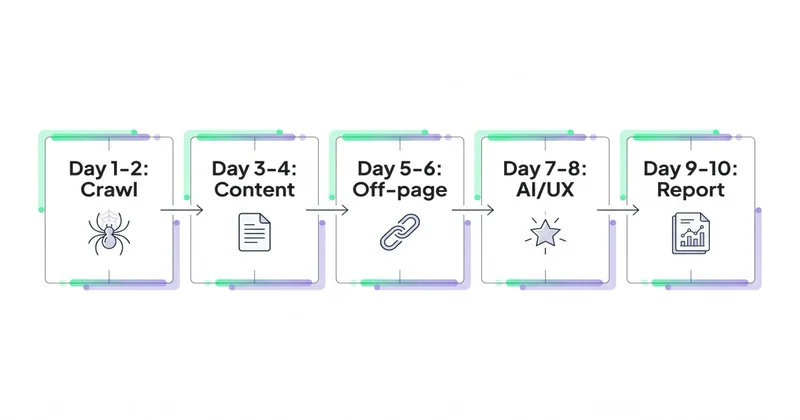
Raport powinien grupować rekomendacje według wpływu i trudności: krytyczne błędy techniczne, szybkie wygrane, aktualizacje treści, prace strukturalne i działania długoterminowe.
Jak podchodzimy do tego w Space Ads
W Space Ads zaczynamy audyt SEO od połączenia danych technicznych z priorytetami biznesowymi. Najpierw sprawdzamy, czy ważne adresy są dostępne, indeksowalne i poprawnie rozumiane przez Google: crawl, statusy, canonicale, sitemapę, robots, duplikaty i dane strukturalne. Potem przechodzimy do intencji, jakości treści, linkowania wewnętrznego, E-E-A-T, UX i konwersji, bo sama lista błędów z narzędzia nie mówi, co realnie ogranicza przychód lub leady. W części AEO i AI Search patrzymy na strukturę odpowiedzi, źródła, aktualność, FAQ i fragmenty, które można łatwo zacytować. Wynikiem audytu powinna być roadmapa z priorytetami, właścicielami i kolejnością wdrożeń, nie raport, który dobrze wygląda, ale nie zmienia widoczności.
Najczęstsze błędy
| Błąd | Skutek | Lepsze podejście |
|---|---|---|
| audyt jako lista błędów z narzędzia | brak priorytetów | ocena wpływu biznesowego |
| skupienie tylko na technice | pominięcie intencji i treści | połączenie techniki, contentu i UX |
| przepisywanie meta tagów bez danych | mały wpływ | zacząć od stron z wyświetleniami i niskim CTR |
| ignorowanie kanibalizacji | kilka stron osłabia się nawzajem | mapowanie intencji do URL |
| brak planu wdrożenia | audyt zostaje w PDF-ie | roadmapa z właścicielem i terminami |
Najczęstsze pytania
Jak często wykonywać audyt SEO?
Mała strona może robić głębszy audyt raz lub dwa razy w roku oraz po większych zmianach. Serwis z aktywnym SEO, sklep lub portal powinien mieć stały monitoring i regularne przeglądy.
Co naprawiać najpierw?
Najpierw problemy blokujące indeksację, błędy techniczne na ważnych stronach, duplikaty konwersyjnych URL-i, kanibalizację oraz treści, które mają wyświetlenia, ale słabo odpowiadają na intencję.
Czy audyt SEO obejmuje AI Search?
Tak, ale praktycznie: przez strukturę odpowiedzi, aktualność, źródła, EEAT, dane strukturalne, FAQ i kompletność treści. Nie chodzi o dopisywanie haseł „pod AI”.
Czy narzędzie SEO wystarczy do audytu?
Nie. Narzędzie pokazuje problemy techniczne i dane, ale nie ocenia w pełni intencji, jakości odpowiedzi, doświadczenia autora, procesu sprzedaży i realnego wpływu biznesowego.
Najważniejsze
- Audyt SEO powinien łączyć technikę, treść, UX, dane i biznes.
- Najpierw naprawia się problemy o największym wpływie.
- Treści trzeba oceniać według intencji i przydatności, nie tylko liczby fraz.
- EEAT, źródła i doświadczenie są częścią jakości, nie dodatkiem na końcu.
- Dobry audyt kończy się roadmapą wdrożenia.
Źródła
- Google Search Central — SEO Starter Guide
- Google Search Central — helpful, reliable, people-first content
- Google Search Central — structured data guidelines
- web.dev — Core Web Vitals
SEO to jedna noga widoczności — drugą są płatne kampanie. Jeśli równolegle prowadzisz reklamy, rozważ audyt płatnych kampanii (Google, Meta, TikTok Ads), który uporządkuje wnioski w konkretny plan działania.
Dalsza lektura
Czytaj również

O czym pisać posty na bloga?
Tematy na blog firmowy powinny wynikać z realnych pytań klientów, intencji wyszukiwania, celów biznesowych i miejsca wpisu w klastrze tematycznym. Wpis pokazuje, skąd brać pomysły, jak planować treści pod SEO, AEO i LLM SEO oraz jak unikać przypadkowych tekstów pisanych wyłącznie pod frazy.


Jak wykorzystać Google Search Console w SEO?
Google Search Console pokazuje, jak strona pojawia się w wynikach Google przez zapytania, kliknięcia, wyświetlenia, CTR, pozycje, indeksację i problemy techniczne. Wpis wyjaśnia, jak łączyć GSC z GA4, analizować spadki, poprawiać CTR, znajdować tematy contentowe i odróżniać problem widoczności od problemu konwersji.
Czy opisy kategorii w sklepie internetowym są przydatne pod SEO?
Opisy kategorii w sklepie internetowym mogą wspierać SEO, jeśli pomagają użytkownikowi wybrać produkt, odpowiadają na pytania zakupowe i nie zasłaniają listy produktów. Wpis pokazuje, jak pisać treści kategorii, gdzie je umieszczać, jak łączyć je z FAQ, linkowaniem, filtrami, canonicalami i danymi strukturalnymi.