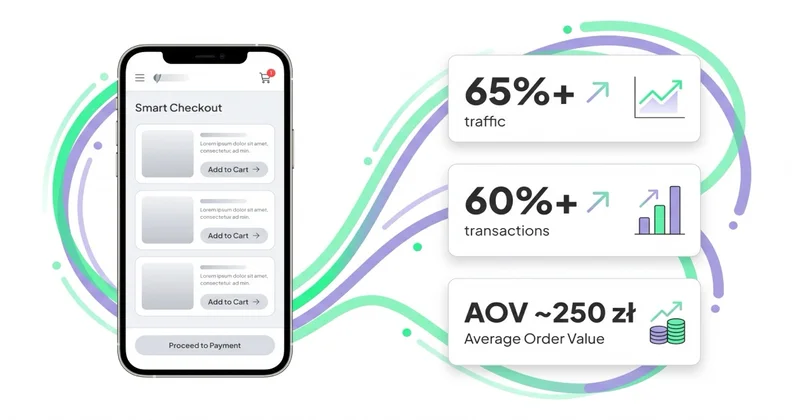
M-commerce, czyli mobile commerce, oznacza sprzedaż i obsługę zakupów przez urządzenia mobilne. Obejmuje nie tylko sklep otwierany na telefonie, ale także płatności mobilne, aplikacje, social commerce, powiadomienia, szybki checkout i doświadczenie użytkownika na małym ekranie.

W praktyce m-commerce nie jest osobnym dodatkiem do e-commerce. Dla wielu użytkowników telefon jest pierwszym miejscem kontaktu z marką, porównania produktu i rozpoczęcia zakupu. Dlatego sklep lub strona sprzedażowa musi działać dobrze od pierwszego dotknięcia ekranu.
W skrócie
- M-commerce to handel i obsługa zakupów na urządzeniach mobilnych.
- Najważniejsze elementy to szybkość, czytelny UX, proste płatności, krótki checkout i dobre formularze.
- Mobile nie oznacza tylko responsywnego layoutu. Liczy się cały proces zakupu.
- Core Web Vitals, szczególnie LCP, INP i CLS, pomagają oceniać doświadczenie strony.
- W e-commerce mobile wpływa na reklamy, SEO, konwersję, koszyk i retencję.
Czym jest m-commerce?
M-commerce obejmuje:
- przeglądanie produktów na telefonie,
- zakupy przez mobilną wersję sklepu,
- zakupy w aplikacji,
- płatności mobilne,
- social commerce,
- powiadomienia push,
- mobilny remarketing,
- odbiór w sklepie po zamówieniu online,
- obsługę klienta przez komunikatory.
To szersze pojęcie niż „strona responsywna”. Responsywność jest podstawą, ale nie gwarantuje wygodnego zakupu.
Dlaczego mobile jest trudniejsze?
Na telefonie użytkownik ma:
- mniejszy ekran,
- więcej rozproszeń,
- trudniejsze wpisywanie danych,
- zależność od jakości połączenia,
- krótszą cierpliwość wobec błędów,
- większą potrzebę szybkich płatności.
Dlatego proces powinien być prostszy niż na desktopie, a nie tylko pomniejszony.
Najważniejsze elementy dobrego m-commerce
Szybkość
Strona musi ładować się szybko na realnych urządzeniach i połączeniach. Core Web Vitals obejmują LCP, INP i CLS, czyli ładowanie, interaktywność i stabilność wizualną.
Nawigacja
Menu, filtry, wyszukiwarka i kategorie powinny być wygodne dla kciuka. Zbyt małe elementy i wielopoziomowe menu utrudniają zakup.
Karta produktu
Na telefonie szczególnie ważne są:
- zdjęcia,
- cena,
- dostępność,
- warianty,
- rozmiary,
- dostawa,
- zwroty,
- opinie,
- przycisk dodania do koszyka.
Checkout
Checkout mobilny powinien mieć mało pól, czytelne błędy, autouzupełnianie, zakup jako gość i popularne płatności.
Płatności mobilne
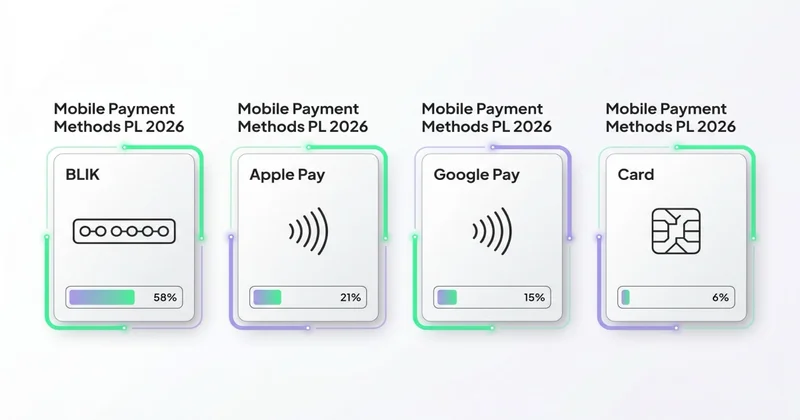
Im mniej ręcznego wpisywania danych, tym lepiej. W Polsce ważne są szybkie metody płatności, w tym BLIK, karty i portfele mobilne.
M-commerce a reklamy
Duża część ruchu z social media, YouTube, Display i Performance Max trafia na mobile. Jeżeli landing page działa słabo na telefonie, kampania może wyglądać na nieskuteczną, choć problem leży po stronie doświadczenia po kliknięciu.
Przed zwiększaniem budżetu warto sprawdzić:
- szybkość strony mobilnej,
- zachowanie po kliknięciu,
- błędy formularzy,
- porzucenia koszyka,
- konwersje według urządzeń,
- jakość stron produktowych.
Jak podchodzimy do tego w Space Ads
W Space Ads analizujemy m-commerce przez pryzmat całej ścieżki po kliknięciu, nie tylko udziału ruchu z telefonu. Sprawdzamy szybkość na realnych urządzeniach, Core Web Vitals, czytelność karty produktu, filtry, formularze, checkout, płatności mobilne, błędy walidacji i zachowanie według urządzeń w GA4. W kampaniach nie odcinamy mobile tylko dlatego, że last click pokazuje niższy współczynnik konwersji niż desktop. Telefon często rozpoczyna ścieżkę, pomaga porównać ofertę i wraca przez remarketing, dlatego patrzymy na konwersje wspomagane, jakość sesji i miejsca porzuceń. Najważniejsze decyzje wdrożeniowe dotyczą zwykle usunięcia tarcia: krótszych formularzy, szybszych płatności, lepszych filtrów i prostszej karty produktu.
M-commerce w usługach
Mobile commerce nie dotyczy wyłącznie sklepów. W usługach telefon często służy do:
- wyszukania firmy,
- kliknięcia numeru telefonu,
- wysłania formularza,
- rezerwacji,
- sprawdzenia opinii,
- porównania cennika,
- zapisania lokalizacji.
Dlatego strony usługowe również powinny mieć mobilny UX, szybki kontakt i formularze dostosowane do telefonu.
Najczęstsze błędy
- Traktowanie wersji mobilnej jako kopii desktopu.
- Zbyt wolne ładowanie.
- Filtry trudne do użycia na telefonie.
- Za małe przyciski.
- Długi formularz checkoutu.
- Brak popularnych płatności mobilnych.
- Pop-upy zasłaniające treść.
- Brak testów na realnych urządzeniach.
FAQ
Czy m-commerce wymaga aplikacji mobilnej?
Nie. Aplikacja ma sens przy częstych zakupach, lojalności i dużej bazie klientów. Dla wielu firm lepszym priorytetem jest szybka i wygodna strona mobilna.
Czy responsywny sklep wystarczy?
Nie zawsze. Responsywność oznacza dopasowanie układu, ale m-commerce wymaga też szybkiego działania, prostego checkoutu, wygodnych płatności i dobrego UX.
Czy mobile wpływa na SEO?
Tak, doświadczenie strony, szybkość i użyteczność mają znaczenie dla użytkowników oraz widoczności. Google dokumentuje Core Web Vitals jako część oceny doświadczenia strony.
Czy m-commerce dotyczy B2B?
Tak. W B2B mobile często służy do researchu, kontaktu, porównania i powrotu do treści, nawet jeśli finalna decyzja odbywa się później na desktopie.
Najważniejsze
M-commerce to pełne doświadczenie zakupu i kontaktu na urządzeniu mobilnym. Najważniejsze są szybkość, czytelność, prosty proces, płatności mobilne i brak tarcia w formularzach. Mobile trzeba projektować jako główny scenariusz użytkownika, a nie jako pomniejszoną wersję desktopu.
Źródła i dalsza lektura
Czytaj również

Marka własna (private label): jak zbudować i wypromować własny brand
Produkcja pod własną marką to dopiero początek. Potrzebne są walidacja popytu, kontrola dostawcy, zgodność produktu, ekonomia zapasu i marketing oparty na dowodach.



Kalendarz marketingowy 2027: planuj wokół lead time'ów, nie dat
Kalendarz marketingowy 2027 z dokładnymi datami dla Polski, Black Friday i Cyber Monday. Pokazujemy, jak wybrać okazje pasujące do biznesu, policzyć marżę oraz planować kampanie 2–20 tygodni wcześniej.

Program lojalnościowy dla sklepu internetowego: co naprawdę działa
Dobry program lojalnościowy zmienia zachowanie klienta, a nie tylko rozdaje rabaty stałym kupującym. Porównujemy punkty, poziomy, płatne członkostwo i zwrot środków oraz pokazujemy, jak policzyć ich realny wpływ na marżę.