Digital marketing to wszystkie działania marketingowe prowadzone w kanałach cyfrowych: w wyszukiwarkach, social mediach, e-mailu, reklamach płatnych, treściach, analityce, automatyzacji i sprzedaży online. Jego celem jest dotarcie do właściwych odbiorców, zbudowanie zaufania i doprowadzenie do mierzalnego działania.
Największą różnicą między digital marketingiem a tradycyjnym marketingiem jest pomiar. W kanałach cyfrowych można analizować źródła ruchu, zachowanie użytkowników, koszty, konwersje, wartość sprzedaży i jakość leadów.
W skrócie
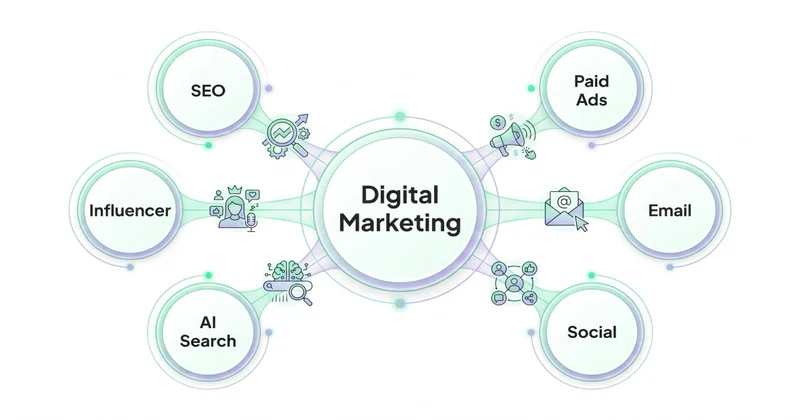
- Digital marketing obejmuje SEO, Google Ads, social media, content, e-mail, analitykę, automatyzację i CRO.
- Nie jest jednym kanałem, tylko systemem połączonych działań.
- Największą przewagą jest mierzalność i możliwość szybkiej optymalizacji.
- Skuteczność zależy od strategii, danych, treści, kreacji i doświadczenia użytkownika.
- W e-commerce digital marketing łączy ruch, feed produktowy, konwersję, retencję i analitykę.
Co obejmuje digital marketing?
SEO
SEO buduje widoczność organiczną w wyszukiwarkach. Obejmuje treści, techniczne SEO, strukturę strony, linkowanie wewnętrzne, autorytet i doświadczenie użytkownika.
Reklamy płatne
Paid media obejmują m.in. Google Ads, Meta Ads, LinkedIn Ads, TikTok Ads, YouTube Ads i kampanie programmatic. Pozwalają szybciej docierać do wybranych odbiorców, ale wymagają budżetu i pomiaru rentowności.
Content marketing
Treści pomagają edukować, odpowiadać na pytania, budować zaufanie i wspierać SEO oraz sprzedaż. Mogą mieć formę artykułów, poradników, raportów, wideo, webinarów, case studies i newsletterów.
Social media
Social media wspierają rozpoznawalność, komunikację z odbiorcami, dystrybucję treści, reklamy i budowanie społeczności.
E-mail marketing i automatyzacja
E-mail pozwala utrzymywać kontakt z osobami, które już znają markę. W e-commerce ważne są scenariusze powitalne, porzucone koszyki, rekomendacje i komunikacja po zakupie.
Analityka i CRO
Analityka pokazuje, co działa, a CRO pomaga poprawiać konwersję na stronie. Bez tych elementów digital marketing łatwo staje się wydawaniem budżetu bez wiedzy o wyniku.
Dlaczego digital marketing jest ważny?
Odbiorcy podejmują decyzje online
Nawet gdy zakup finalnie odbywa się offline, research często zaczyna się w internecie. Użytkownicy porównują ceny, opinie, alternatywy, recenzje i dostępność.
Można mierzyć efekty
Digital marketing pozwala analizować koszt kliknięcia, koszt leada, koszt sprzedaży, ROAS, wartość koszyka, współczynnik konwersji i udział kanałów w ścieżce.
Można szybko testować
Kanały cyfrowe umożliwiają testy reklam, landing page'y, ofert, cen, treści i grup odbiorców. To skraca czas uczenia się rynku.
Można personalizować komunikację
Segmentacja pozwala dopasować komunikat do etapu lejka, wcześniejszego zachowania i potrzeb odbiorców.
Digital marketing a marketing internetowy
W praktyce te pojęcia często są używane zamiennie. Digital marketing jest jednak szerszy, bo obejmuje również działania cyfrowe, które nie muszą odbywać się wyłącznie w klasycznej przeglądarce, np. aplikacje, automatyzację, ekrany digital signage, CRM i integracje danych.
Jak zbudować strategię digital marketingu?
1. Cel
Cel powinien być konkretny: sprzedaż, leady, wzrost rozpoznawalności, wejście na rynek, retencja, rekrutacja lub edukacja odbiorców.
2. Grupa odbiorców
Trzeba określić, kto ma zostać pozyskany, jaki ma problem, gdzie szuka informacji i jak podejmuje decyzję.
3. Lejek
Nie każdy użytkownik jest gotowy do zakupu. Treści, reklamy i landing page'e powinny odpowiadać różnym etapom: świadomość, rozważanie, decyzja, lojalność.
4. Kanały
Kanały należy dobrać do celu. Search działa przy aktywnym popycie, social i YouTube przy budowaniu zainteresowania, e-mail przy retencji, a SEO przy długoterminowej widoczności.
5. Pomiar
Przed skalowaniem trzeba mieć poprawne konwersje, wartości, źródła ruchu i raportowanie. Bez pomiaru trudno odróżnić wzrost od pozoru wzrostu.
Jak to działa w e-commerce?
W e-commerce digital marketing łączy:
- pozyskanie ruchu,
- jakość feedu produktowego,
- kampanie Shopping i PMax,
- SEO kategorii i produktów,
- social commerce,
- e-mail i SMS,
- porzucone koszyki,
- CRO checkoutu,
- retencję klientów,
- analizę marży.
Sklep internetowy nie powinien polegać wyłącznie na pozyskaniu nowych użytkowników. Rentowność często zależy od powrotów, wartości koszyka, powtarzalności zakupów i jakości bazy klientów.
Jak podchodzimy do tego w Space Ads
Digital marketing traktujemy jako system decyzji opartych na danych, nie listę kanałów do odhaczenia. Zaczynamy od celu biznesowego, marży, cyklu decyzji, grupy odbiorców i jakości pomiaru, a dopiero potem wybieramy kanały. SEO, paid media, social, e-mail, content i CRO muszą mieć rolę w tej samej ścieżce: pozyskanie popytu, edukacja, konwersja, powrót lub retencja. W praktyce ważna jest pętla uczenia: test hipotezy, pomiar, decyzja i przeniesienie wniosków do kolejnych kampanii. Nie chodzi o to, żeby być wszędzie. Chodzi o to, żeby wiedzieć, które działania realnie zwiększają sprzedaż, jakość leadów lub wartość klienta.
Najczęstsze błędy
- Działanie w kanałach bez wspólnej strategii.
- Brak poprawnego pomiaru konwersji.
- Ocena kampanii tylko po kliknięciach.
- Zbyt szybkie skalowanie bez rentowności.
- Brak pracy nad stroną i konwersją.
- Tworzenie treści bez intencji użytkownika.
- Brak rozróżnienia działań brandowych i performance.
FAQ
Czy digital marketing jest tylko dla sklepów internetowych?
Nie. Dotyczy także usług, B2B, SaaS, edukacji, marek osobistych, firm lokalnych, organizacji i produktów cyfrowych.
Od czego zacząć digital marketing?
Najpierw od celu, grupy odbiorców, oferty i pomiaru. Dopiero potem warto wybierać kanały.
Czy SEO jest częścią digital marketingu?
Tak. SEO jest jednym z podstawowych obszarów digital marketingu, obok reklam płatnych, contentu, social mediów, e-maila i analityki.
Czy digital marketing może działać bez reklam płatnych?
Może, ale zwykle wolniej. SEO, content, e-mail, PR i social organic mogą budować widoczność, jednak reklamy płatne przyspieszają testy i skalowanie.
Najważniejsze
Digital marketing to system działań cyfrowych, a nie pojedynczy kanał. Największą wartość daje wtedy, gdy kanały są połączone wspólnym celem, mierzone poprawnymi danymi i optymalizowane względem realnego wyniku biznesowego.
Źródła i dalsza lektura
Czytaj również
Czym jest Marketing internetowy i co musisz o nim wiedzieć?
Marketing internetowy obejmuje SEO, reklamy płatne, social media, content, e-mail, analitykę i optymalizację konwersji, ale skuteczność zależy od strategii, oferty i pomiaru. Wpis pokazuje, jak dobrać kanały do celu, jak łączyć działania w e-commerce i dlaczego wynik biznesowy jest ważniejszy niż sama obecność w wielu miejscach.


Content marketing, czyli sposób na budowanie profesjonalnego wizerunku przedsiębiorstwa
Content marketing buduje widoczność, zaufanie i popyt przez treści, które odpowiadają na realne pytania klientów, a nie tylko zbierają frazy SEO. Wpis pokazuje, jak łączyć intencje, klastry tematów, E-E-A-T, dystrybucję, aktualizacje i pomiar, żeby treści wspierały sprzedaż oraz decyzje użytkowników.
Evergreen content - co to jest i dlaczego potrzebujesz go na swoim blogu?
Evergreen content to treści, które odpowiadają na trwałe pytania użytkowników i zachowują wartość długo po publikacji. Wpis wyjaśnia, czym różni się od newsów, jak wybierać tematy, budować strukturę, dbać o E-E-A-T i planować aktualizacje, żeby artykuł nie tracił jakości wraz z upływem czasu.